
Kanji learning guide
Where should you start with kanji?
Give each character meaning, then give your learning a little structure. Here is a sequence you can adapt to your own experience.
Choose a starting point that fits
Beginners can start with familiar characters such as 山, 川, 木 and 日. Children may follow their Japanese school grade; adult learners need not treat grade labels as age restrictions. Check whether you know each shape, reading and common use.
Use a picture as a memory cue
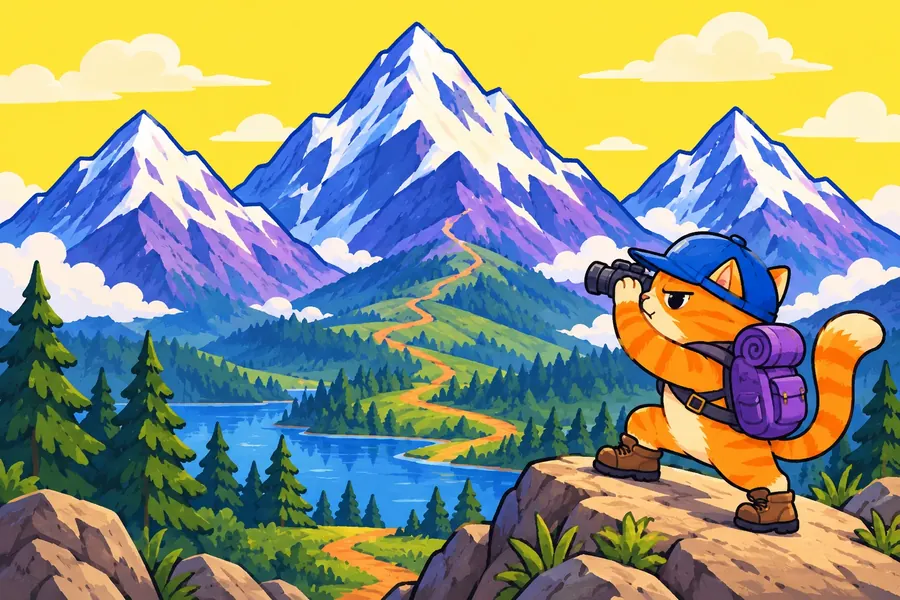
Look at the character and illustration, then describe the connection in your own words. Three mountain peaks can remind you of 山. This is a memory association, not a claim about the character’s historical origin.
Learn readings inside words and sentences
One kanji can have several readings. Listen to a word, then the full sentence. 山 is read やま on its own, while 火山 is かざん. Words make the reading concrete.
Watch the strokes, then write
Notice each stroke’s direction and order before writing from the model. Try tracing an unfamiliar character before writing it independently. Practice feedback is a learning aid, not a replacement for a teacher’s or specialist’s assessment.
Leave a little room for review
Choose a manageable daily amount, then revisit characters you still confuse. Saved characters, mistake correction and due reviews can help you choose what to look at next. You do not need to learn every character at once.
Pick a character and try the sequence for yourself.
Try a kanji lesson